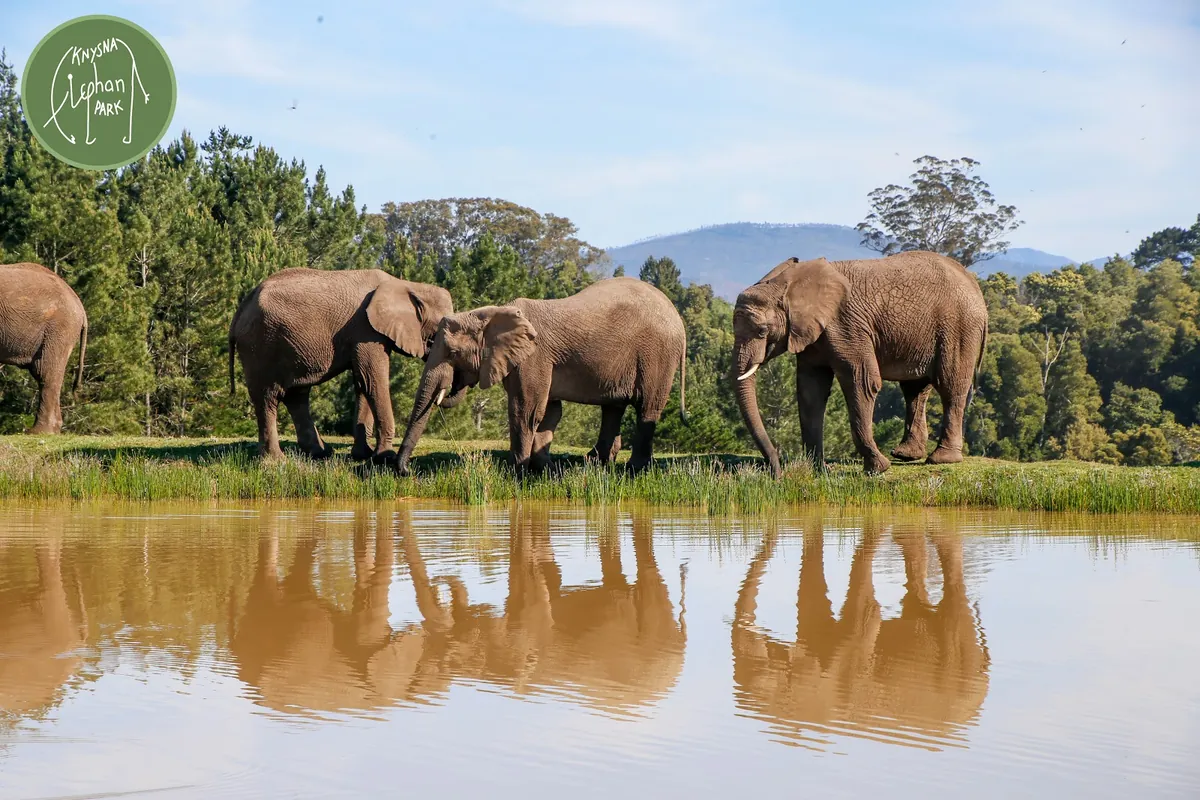
The elephant park in Knysna is not in Knysna. It sits 22km east of town on the N2 and only 9km west of Plettenberg Bay, with a Plett postal address — which is why, if you are basing yourself in Knysna, the drive is longer than the name leads you to expect. That is the first of several things about this place that the internet gets wrong, and it is the least consequential of them.
This is the guide I would give a friend who saw the brown road sign, wondered whether to pull in, and wanted to know what they would actually be paying for. It covers what it costs in 2026, what happened to the elephant rides, where these elephants came from, and the welfare question — which is real, and which I am not going to tiptoe around. If you are still assembling the wider trip, our Knysna travel guide covers the town itself.
Where the park actually is
The park's own contact page puts it 22km from Knysna and 9km from Plettenberg Bay, just off the N2 at Harkerville. Visit Knysna says 23,5km. Either way, the practical point stands: this is a Plett-side attraction wearing a Knysna name.
That matters for planning. Every self-catering place within comfortable reach of the gate is on the Plett side of the N2 — the nearest Knysna stays are more than twice the distance. If the elephants are the anchor of your day, base yourself in Plett and drive west, not the other way round.
What it costs and what you get
There are two products, and confusing them is the single most common planning mistake. Prices below are the park's own, checked in July 2026.
| Tour | SA resident | Non-resident | Booking |
|---|---|---|---|
| Meet our Herd — adult (15+) | R420 | R510 | Not required |
| Meet our Herd — child (5–14) | R220 | R315 | Not required |
| Meet our Herd — under 5 | Free | Free | Not required |
| Groups of 10+ | R355 | R445 | Not required |
| Elephant Experience (3km walk) | R975 | R1,160 | Essential — 08h00 & 16h00 only |
| Elephant snack bucket | R60 | R60 | Bought on site |
Pensioners and students get 10% off. The park is open every day of the year, but the closing time shifts with the season — 09h00 to 16h00 in summer, 09h00 to 15h30 in winter. That half-hour catches people out on a winter afternoon run from Knysna, so leave earlier than you think you need to.
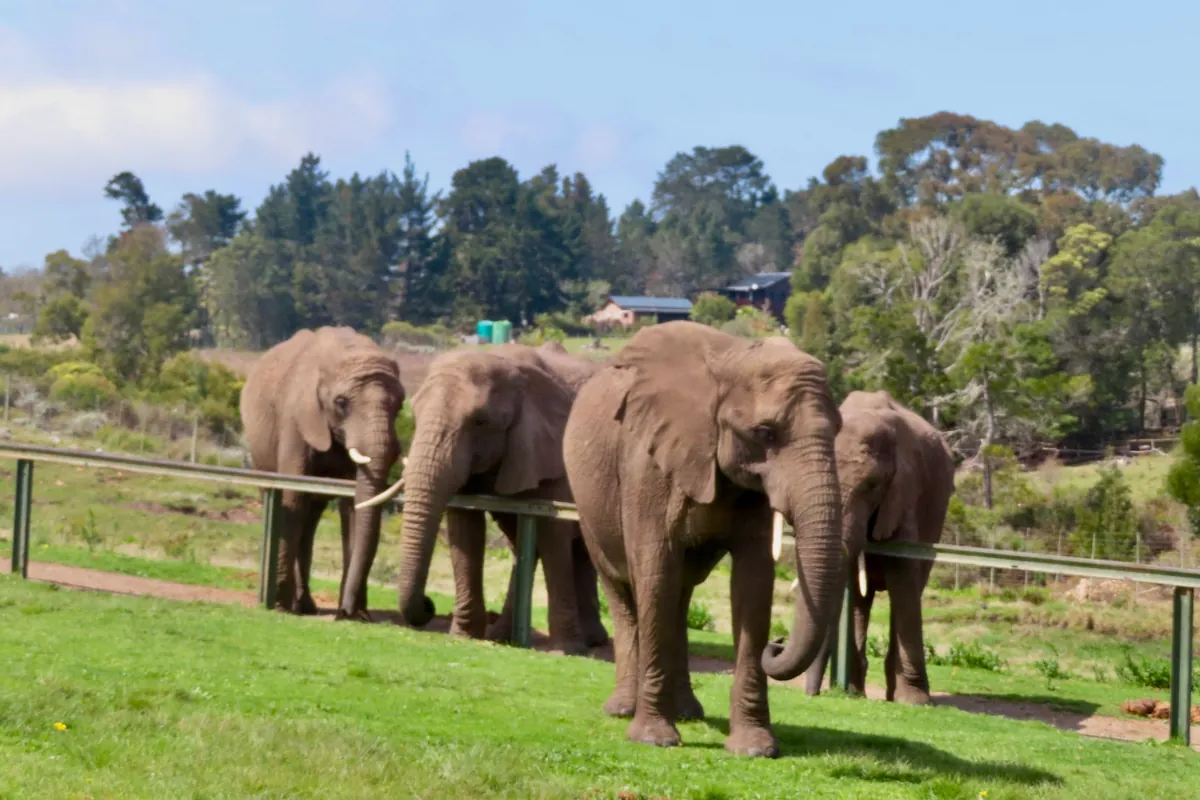
Meet our Herd is the standard tour, runs about an hour, and departs through the day — the park's own page states bookings are not required, so a walk-up works. The Elephant Experience is the opposite: a 3km walk of roughly 45 minutes, two departures a day at 08h00 and 16h00, pre-booking essential. The only published difference between the two Experience slots is that the morning one includes breakfast at the on-site café; the park makes no claim that the elephants are better value to watch at either hour.
Two things worth knowing before you arrive. The South African resident rate is a genuine saving and most international guides to this park quote only the tourist price — but you need proof of residency at the gate, so bring your ID. And the park runs a professional photography service: you are welcome to take your own photos, but expect to be offered prints and digital copies afterwards, currently R300 for high-resolution digitals, R130 for four emailed images, R65 for an A5 print and R85 for an A6 photocard. Decide in advance whether you want them and the upsell stops being a surprise.
No, you cannot ride the elephants
Knysna Elephant Park ended elephant-back rides on 1 March 2018. They are not offered, they are not quietly available on request, and they are not coming back. The park announced it publicly at the time.
I am labouring the point because the myth is unusually persistent. Eight years of pre-2018 blog posts, printed guidebooks and old reviews still circulate, and people arrive expecting a ride. What is on offer today is walking among the herd and hand-feeding them from a bucket you pay for at the gate.
Access, kids and the day itself
This is where most guides to the park go quiet, so here is what the park and an independent accessibility audit actually publish.
The park describes itself as largely wheelchair friendly, and says the Meet our Herd tour has been specifically adapted to be as wheelchair friendly as possible. It is equally clear about the limits: the Elephant Nature Lodge and the elephant walks are not wheelchair friendly. An independent audit by Accessible South Africa lists wheelchair parking bays at reception, an accessible toilet with side access and a lever flush, a ramp from the information centre to the vehicles, and a ramp onto the vehicle passenger trailer. Its listing also covers sight- and hearing-impaired visitors, parents with toddlers and elderly guests.
That trailer ramp gives away something no other guide mentions: you are driven out to the herd rather than walking there from reception. If mobility is a factor in your day, that changes the calculation considerably.
On children, the park's position is that all ages are welcome as long as an adult is with them, and under-fives go free. Worth pairing that with the fitness note, though — the premium Experience is a 3km walk for which the park asks for comfortable walking shoes and reasonable fitness. In practice that makes the hour-long Meet our Herd the sensible choice with small children, and the Experience better suited to older kids and adults.
| Meet our Herd | Elephant Experience | |
|---|---|---|
| Length | About 1 hour | 3km walk, about 45 minutes |
| Departures | Through the day | 08h00 and 16h00 only |
| Booking | Not required | Essential |
| Fitness | No stated requirement | Reasonable fitness, walking shoes |
| Wheelchair | Adapted for wheelchair users | Not wheelchair friendly |
| Breakfast | No | Morning slot only |
The park publishes no wet-weather policy and no recommended total visit time, so if the forecast looks poor it is worth phoning ahead rather than trusting a third-party page that claims to know.
Where these elephants came from
Here is the correction that surprises people most. These are not rescued Knysna forest elephants. Not one of them.
The park was founded in 1994 by Ian and Lisette Withers, and the individual histories of the profiled residents trace back to a Kruger cull, a relocation from the Northern Province, a translocation, a North West hunting farm, and one animal born at the park itself. The founding story invokes the plight of the Knysna forest elephants rhetorically, and the name does the rest — but there is no connection between the herd behind the fence and the elephants of the forest.
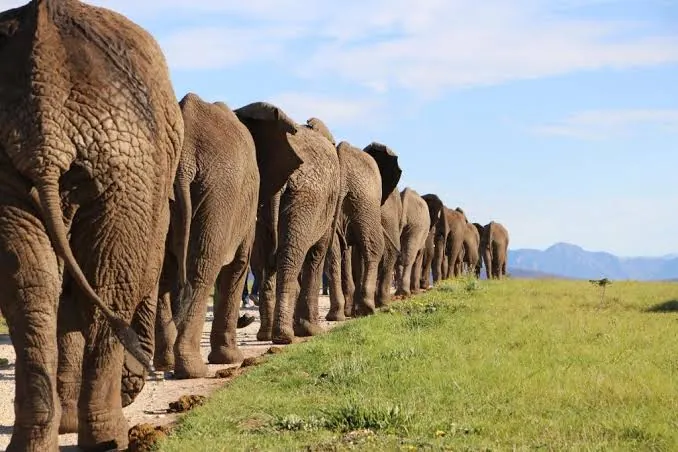
On herd size, I have to be straight with you: the published numbers do not agree. The park's own homepage and its on-site research unit both profile five named individuals. The park's booking site and two regional tourism bodies say ten. Plett Tourism says eight. Two of those four figures come from the park's own web properties. Five is the number with named animals attached to it, so it is the one I would trust — but if an exact count matters to you, phone them before you go.
The welfare question, answered honestly
You cannot write about a captive elephant facility in 2026 and skip this, so here it is plainly: the bodies that set the standards do not agree with each other, and any guide telling you there is a clean consensus is selling you something.
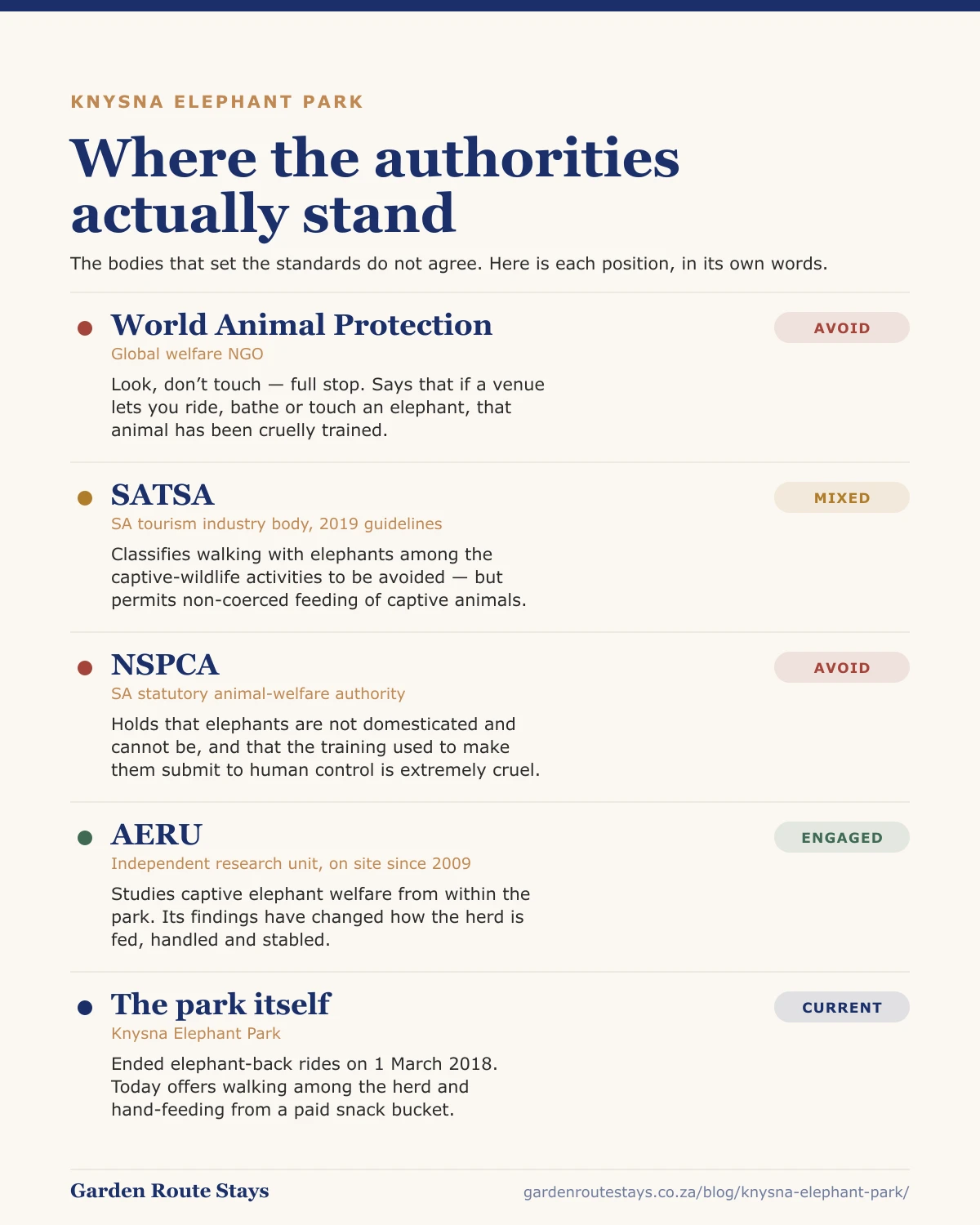
SATSA, the South African tourism industry body, published captive-wildlife guidelines in 2019 that place walking with elephants among the activities to avoid, while permitting non-coerced feeding of animals already in captivity. World Animal Protection goes further: look, don't touch, and if a venue lets you get close enough to touch an elephant, that animal has been trained cruelly to allow it. The NSPCA's position is that elephants are not domesticated animals and cannot be, whatever the industry calls them — which puts it directly at odds with the park's own description of its herd as domesticated.
Against that, one fact worth weighing: the African Elephant Research Unit, an independent non-profit research trust, has been based at the park since October 2009 studying captive elephant welfare, and its findings have changed how the animals are fed, handled and stabled. That is more external scrutiny than most facilities of this kind invite.
I am not going to resolve this for you, because I do not think it is mine to resolve. What I can tell you is what you are choosing between: a well-run captive facility that stopped its worst practice voluntarily and hosts independent researchers, versus a body of expert opinion that says close contact with elephants should not be a tourism product at all. Both of those things are true at once. Decide accordingly.
Knysna's last wild elephant
The other elephant story here is quieter and far sadder. Deep in the indigenous forest near Diepwalle, a separate population of free-roaming elephants survived for centuries. A camera-trap survey running from July 2016 to October 2017 recorded 140 capture events and found a single adult female, always alone. The resulting paper was titled And Then There Was One. A dung study published in 2025 reached the same conclusion.
For years the accepted figure was five, from a 2007 faecal-DNA study since attributed to a genotyping error. The truth appears to be one. As of the most recent reporting in December 2025 she was still alive.
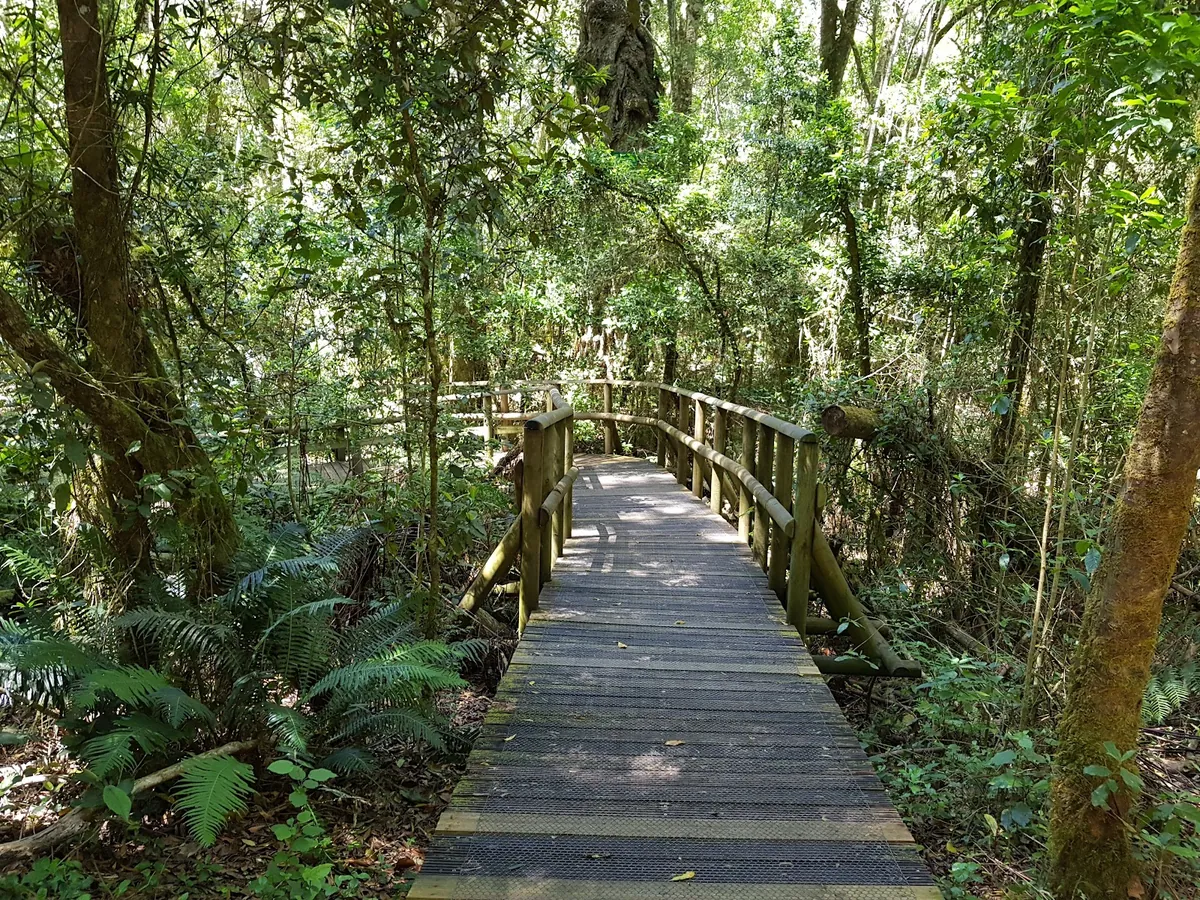
Please do not go looking for her. Her stress response to human activity is a documented research finding, and she is one animal in a very large forest. The forest itself is worth walking for its own sake — the boardwalk at the Garden of Eden, ten minutes up the road, puts you in the same indigenous canopy without disturbing anything.
Other wildlife stops nearby
The stretch of N2 between the park and Plett carries an unusual concentration of animal attractions, most of them within ten minutes of each other. If you are weighing them up, our guide to Plettenberg Bay's animal sanctuaries compares them properly.
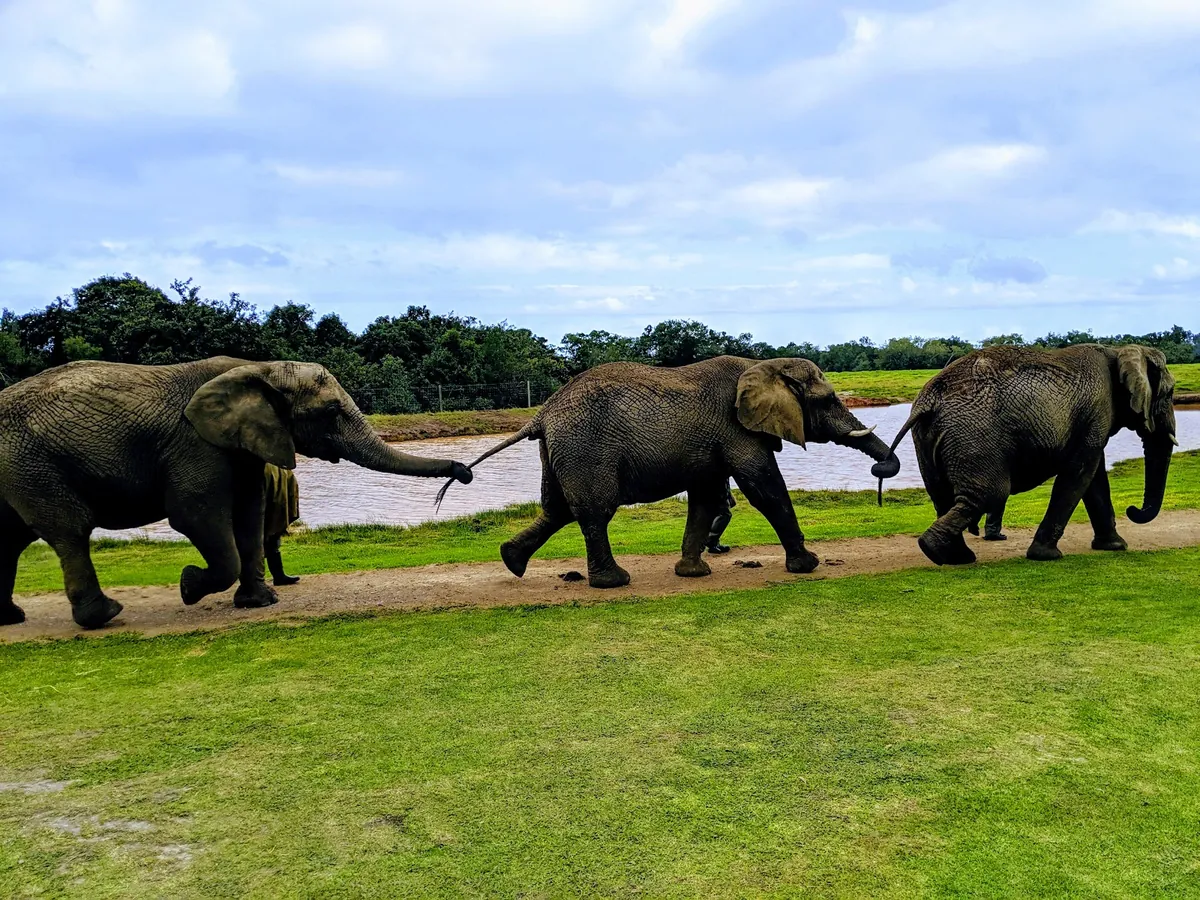
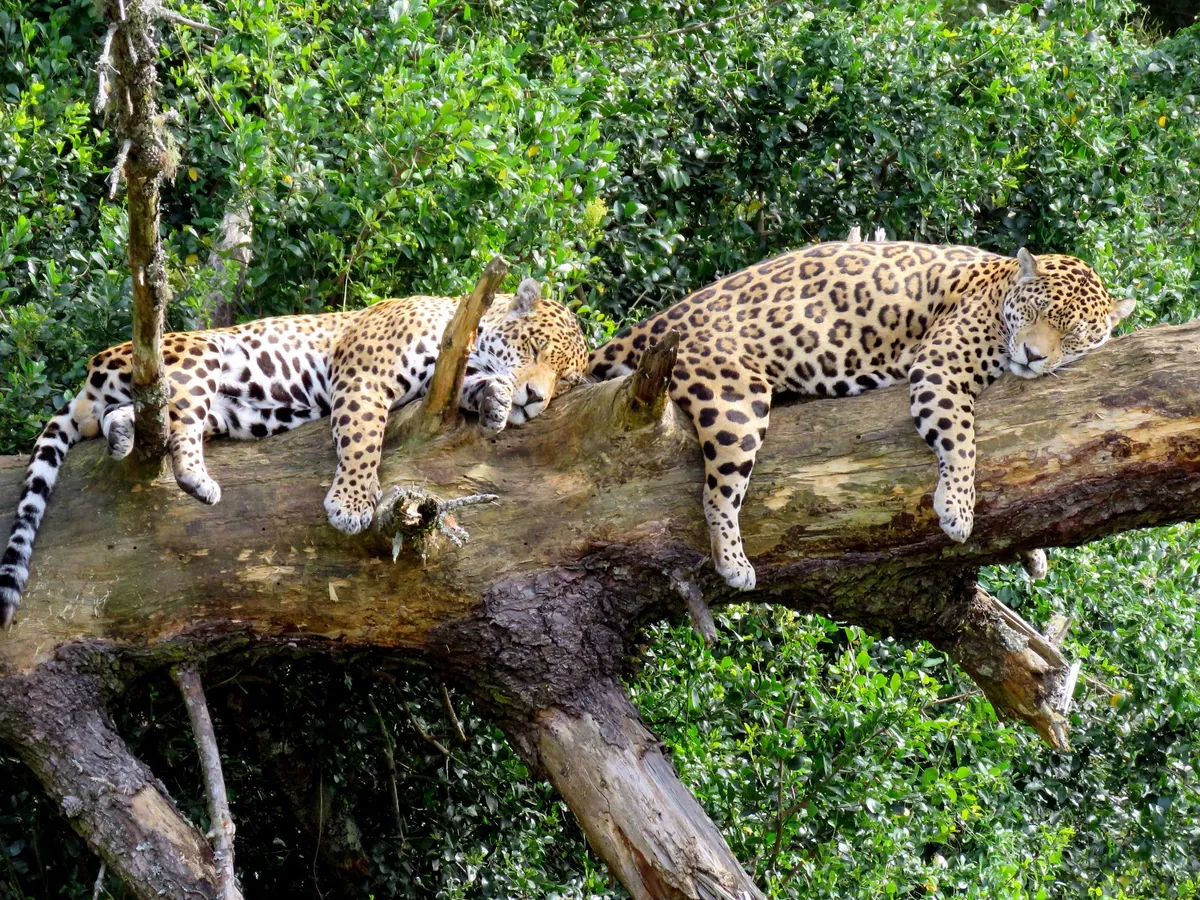
Jukani Wildlife Sanctuary houses big cats, including jaguars and white lions, in large enclosures with no contact permitted — which puts it on the right side of the look-don't-touch line. Tenikwa is a small-cat rehabilitation centre working with servals, caracals and cheetahs. Birds of Eden is a free-flight aviary under the largest dome of its kind, and Monkeyland next door is a free-roaming primate sanctuary. None of the four permits riding.
For a broader sweep of the area beyond the animal attractions, our round-up of things to do in Knysna covers the lagoon, the Heads and the forest drives.
Where to stay near the park
The park does run its own accommodation — a four-star, twelve-room property it calls the Elephant Nature Lodge, listed on booking sites as Knysna Elephant Park Lodge, from around R1,150 per person per night with breakfast. Two things to know if you are tempted: it is bed-and-breakfast rather than self-catering, and despite what one widely-read review claims, the elephant activities are not included — the park's own lodge page states they cost extra and must be pre-booked.
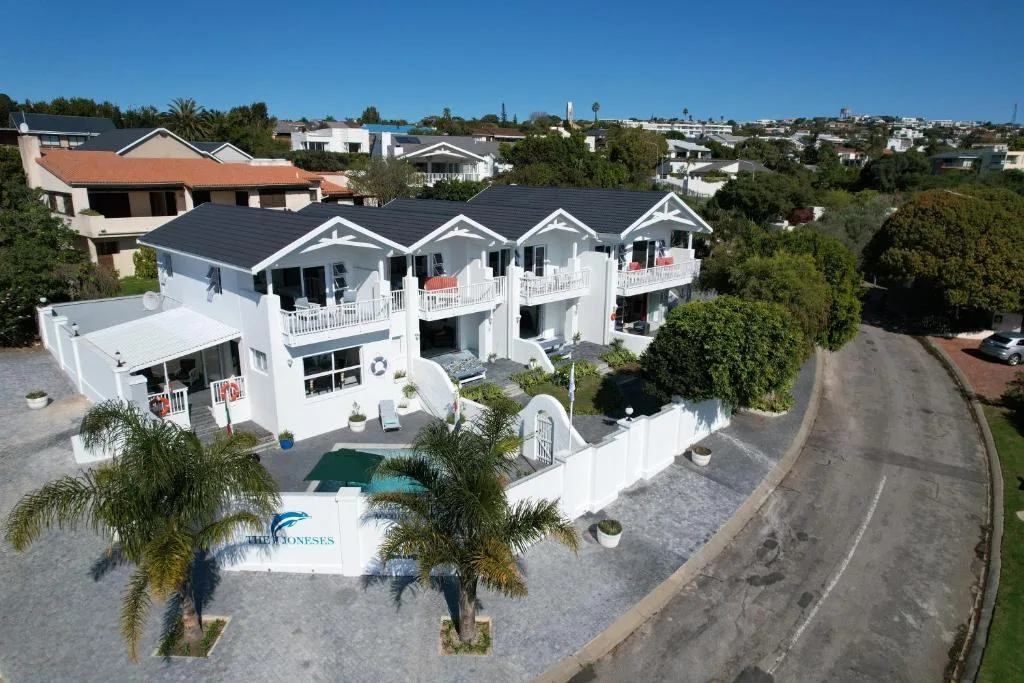
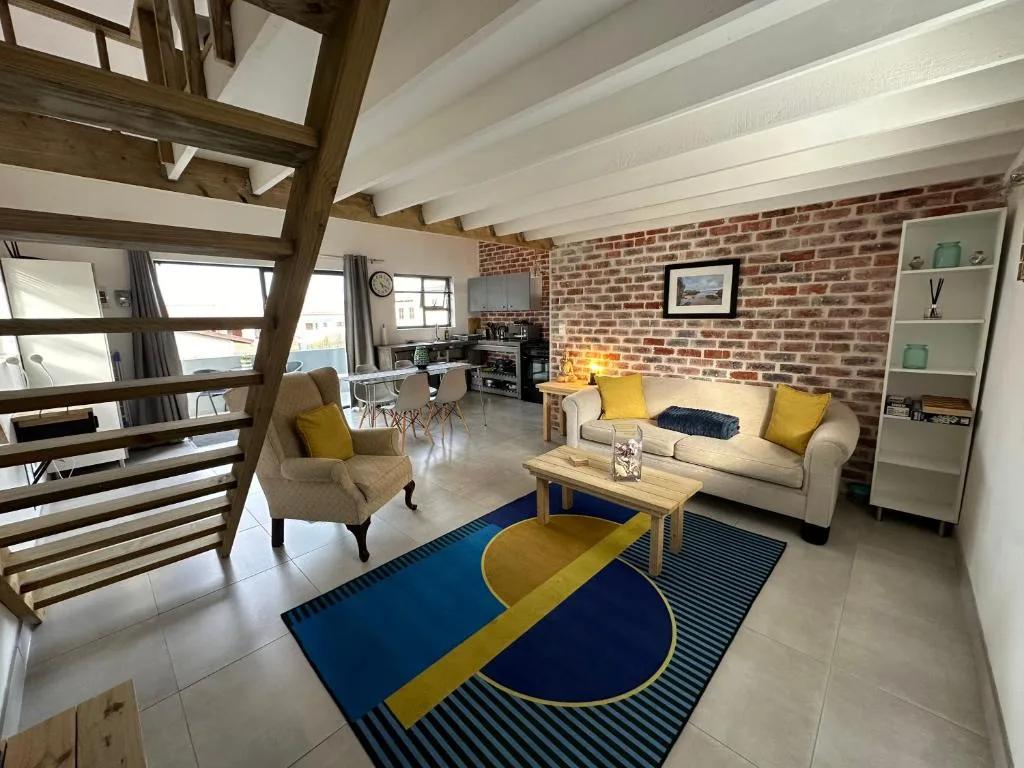
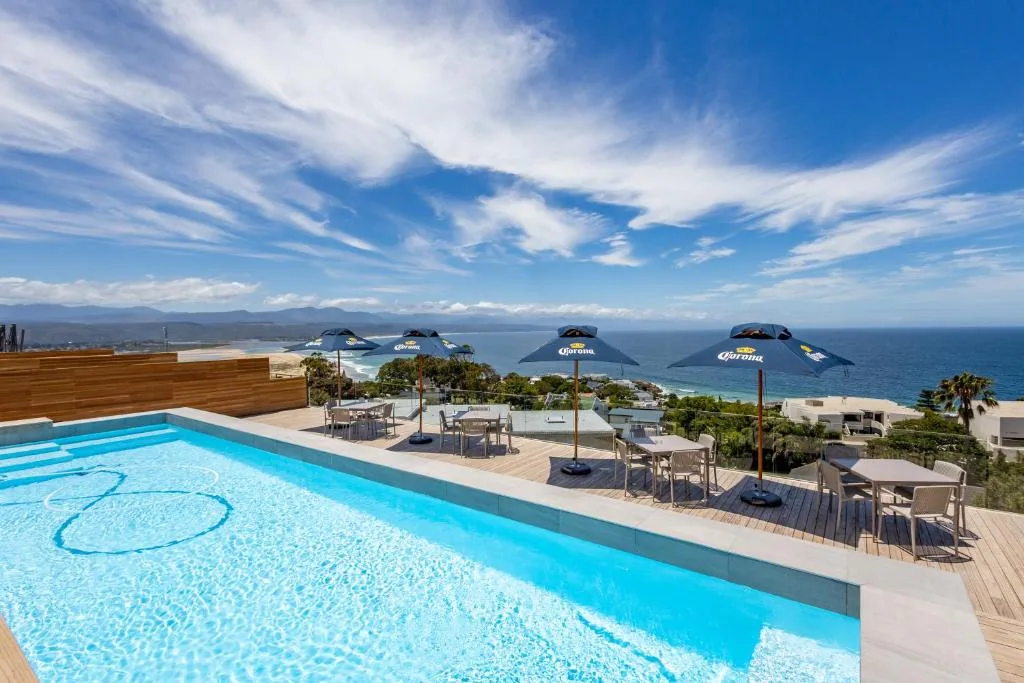
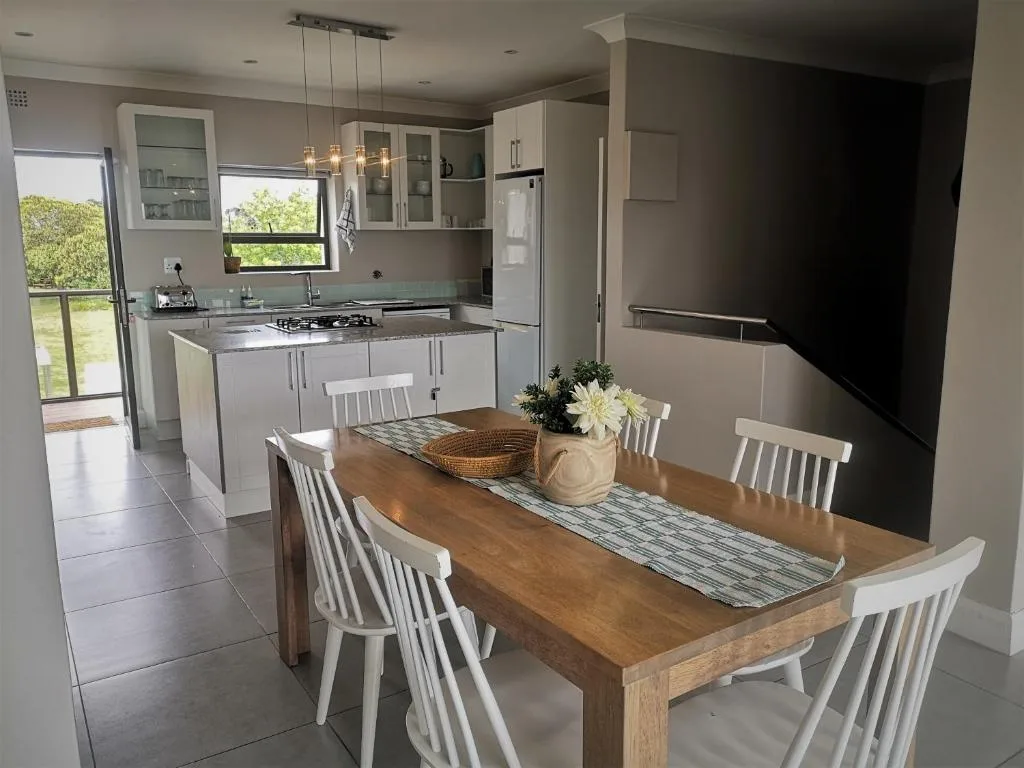
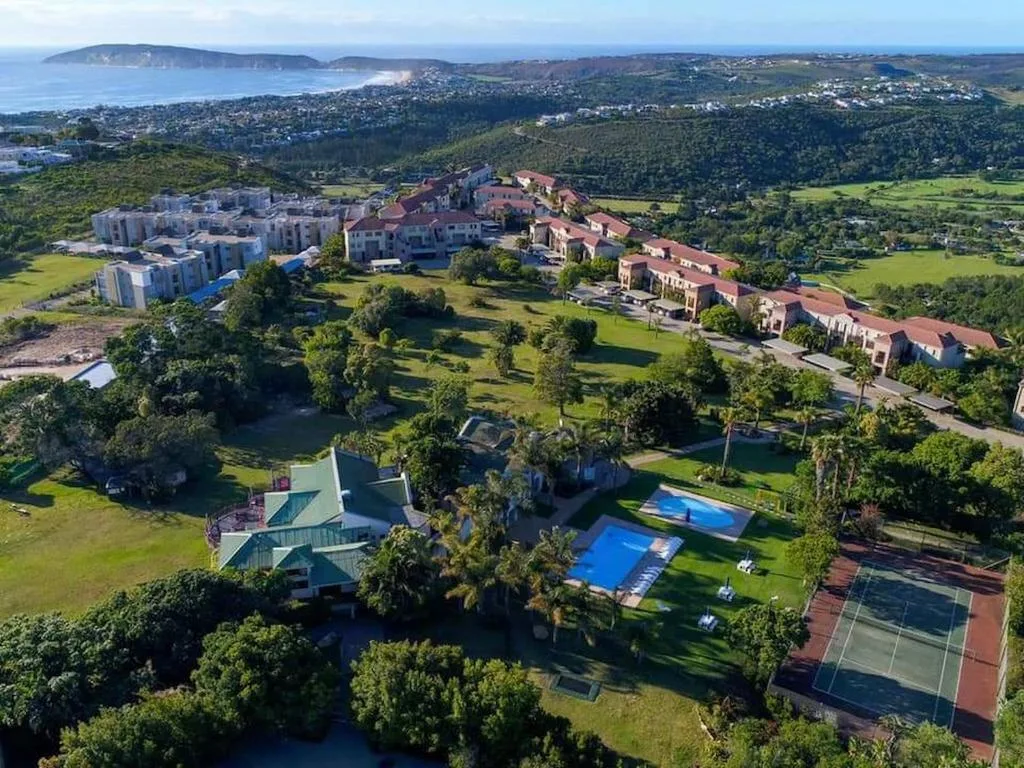
For self-catering, the honest answer is Plettenberg Bay. Every option within about ten minutes of the gate sits on the Plett side — the Castleton and Goose Valley estates cluster closest, roughly 8km from the park. Knysna's nearest stays are more than 17km away, so if you are set on Knysna as a base, treat the park as a half-day excursion rather than a morning stroll.
Sources
- Knysna Elephant Park — Meet our Herd, Elephant Experiences, FAQ, Elephant Nature Lodge, No More Elephant-Back Rides and How It Started (prices and times checked July 2026)
- African Elephant Research Unit — Our Herd
- Accessible South Africa — Knysna Elephant Park accessibility listing
- NSPCA — Elephants in Captivity
- World Animal Protection — Elephant-friendly tourist guide
- SATSA captive-wildlife interaction guidelines, 2019 — announcement
- Moolman et al., And Then There Was One: A Camera Trap Survey of the Declining Population of African Elephants in Knysna, African Journal of Wildlife Research, 2019
Where Plettenberg Bay stays sit
Every listing plotted, with attractions dotted around it. Tap a navy pill to see the stays in that cluster.
Frequently asked questions
Is Knysna Elephant Park worth visiting?
It depends entirely on how you feel about captive elephants. If close contact with habituated animals sits comfortably with you, it delivers exactly that. If you would rather see elephants wild and unmanaged, skip it — Addo is several hours' drive east.
Are there wild elephants in Knysna?
One. A 15-month camera-trap survey published in 2019 found a single adult female in the Knysna forest across 140 capture events, always alone. She has no connection to the elephants at Knysna Elephant Park.
How much is the entrance fee at Elephant Sanctuary?
At Knysna Elephant Park in July 2026, the standard Meet our Herd tour is R420 for South African adults and R510 for non-residents. Children aged 5 to 14 pay R220 or R315. Under-fives are free.
Can you go to Elephant Sanctuary without booking?
At Knysna Elephant Park it depends on the tour. The standard Meet our Herd tour takes walk-ups — the park states bookings are not required. The premium Elephant Experience must be pre-booked and runs only at 08h00 and 16h00.
Can you ride African elephants?
Not at Knysna Elephant Park. Elephant-back rides ended there on 1 March 2018 and are not offered today. Older blog posts and guidebooks still describing rides are out of date.
Do elephants get hurt when ridden?
Welfare bodies say yes. The NSPCA holds that elephants are not domesticated and that the training used to make them submit to human control is extremely cruel. World Animal Protection takes the same position.
Which countries have banned elephant rides?
There is no ban in South Africa. Individual operators have stopped voluntarily, as Knysna Elephant Park did in 2018, and SATSA's 2019 industry guidelines discourage riding — but the practice is regulated by guidance rather than prohibited by law.