This Mossel Bay travel guide covers everything you need to plan a visit to the western gateway of the Garden Route. Mossel Bay punches well above its size: it's the harbour town where Bartolomeu Dias made the first European landfall on South African soil in 1488, where you can boat out to a Cape fur seal colony two kilometres offshore, walk a clifftop trail past a 164,000-year-old inhabited cave, cage dive with great whites and be on a Big 5 game drive within an hour — all without leaving the greater Mossel Bay area.
We keep coming back because the combination is genuinely unusual: serious maritime history, excellent beaches, world-class wildlife encounters and one of the most significant human-origins sites on earth, in a town compact enough to cover in two or three days. Here's what to prioritise.
Mossel Bay's founding story — Bartolomeu Dias and the Dias Museum
On 3 February 1488, Bartolomeu Dias and his crew became the first Europeans to set foot on South African soil, landing at the fresh-water spring at what they named Aguada de São Brás — the Watering Place of St Blaise. They'd rounded the Cape of Good Hope on the outward leg of the voyage that would eventually prove Africa could be circumnavigated, and Mossel Bay's natural harbour gave them exactly what they needed: a sheltered bay and a reliable spring.
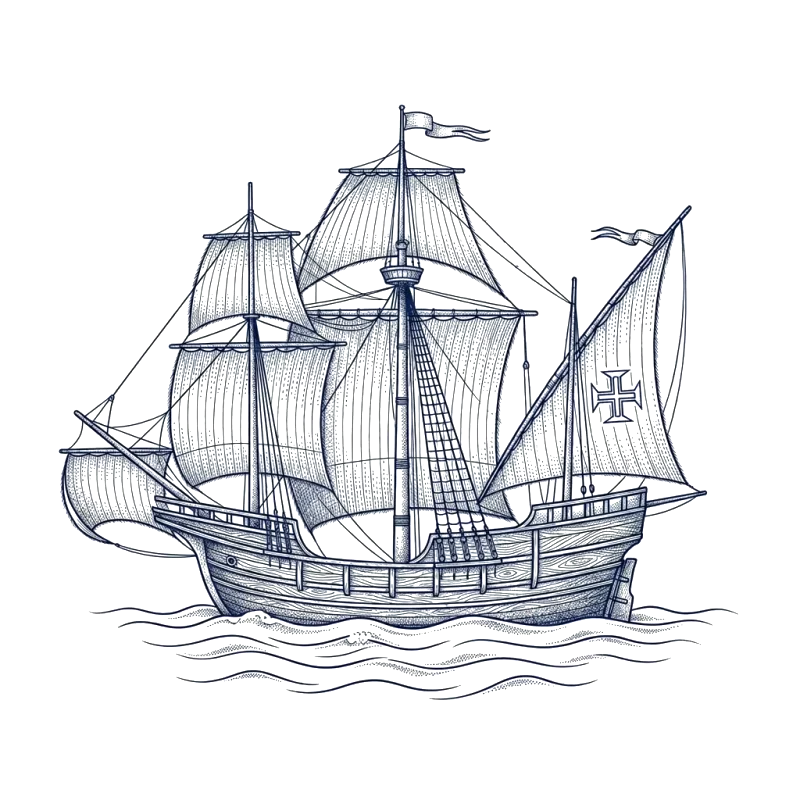
The Bartolomeu Dias Museum Complex tells this story well, and the centrepiece is extraordinary: a full-size replica of the caravel Dias sailed, built in Portugal to mark the 1988 quincentenary of the voyage and then actually sailed to Mossel Bay, where it arrived to a crowd of thousands. It sits under cover in the maritime museum, which makes it your rainy-day pick — but worth visiting in any weather.
Out on the museum grounds, the Post Office Tree is a sprawling milkwood and national monument. In 1501 the navigator João da Nova found a letter tucked in a shoe hung from the tree by an earlier Portuguese captain — thought to be the first postal activity in South Africa. You can still post a card from a boot-shaped postbox here.
Cape St Blaize Lighthouse — Mossel Bay's clifftop landmark
The Cape St Blaize Lighthouse was completed in 1864 — its foundation stone laid in 1862 by the visiting Governor Wodehouse — and it's still an active navigational light, largely automated but staffed. You can tour the tower and climb to the lamp room for an unobstructed view across the bay. The lighthouse sits at the tip of the headland, and standing at the base you can feel exactly why ships needed warning here: the rocks below are jagged and the swell can be heavy.
Directly beneath the lighthouse is Cape St Blaize Cave, a Middle Stone Age site studied as part of the Mossel Bay Archaeology Project — the same research programme that excavated the more famous Pinnacle Point caves a few kilometres west. Even before the formal excavations, early inhabitants clearly found this an attractive spot: the cave mouth faces north, sheltered from the prevailing south-westerly, with coastal food sources — shellfish, fish, seabirds — right there.
The beaches of Mossel Bay — Santos, Diaz and De Bakke
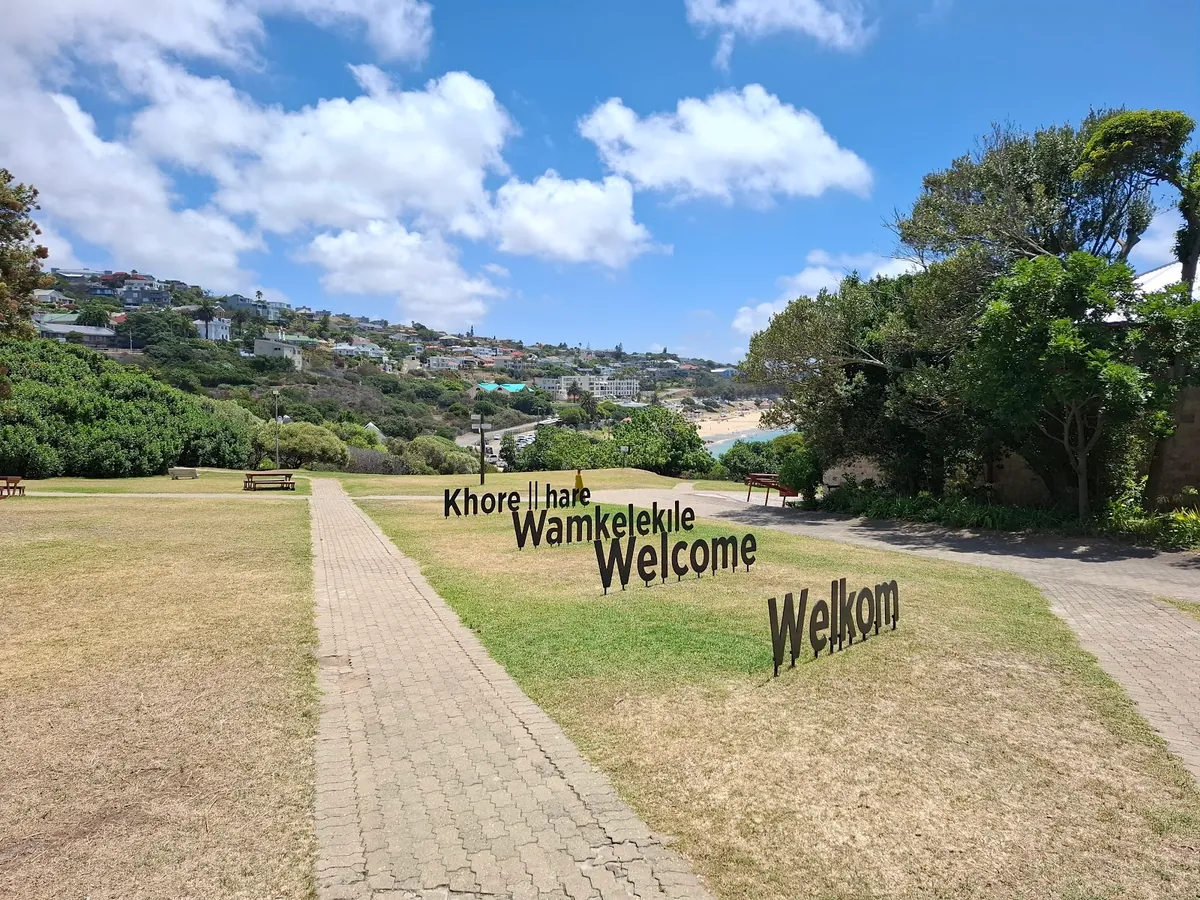
Santos Beach is the main town beach, and it has an unusual advantage: it faces north, sheltered from the south-westerly swell and wind that makes many Western Cape beaches uncomfortable in summer. The result is calm, warm water — 20–22°C through the summer months — and safe, easy swimming right below the old Santos Pavilion. It holds a Blue Flag designation, which means regular water quality testing and lifeguards in season.
Diaz Beach and De Bakke, a short walk east along the shore, are the other town beaches — quieter, with a tidal pool that's ideal for children and less confident swimmers. The boardwalk down through the dune scrub is pleasant, and the backdrop of the Mossel Bay headland makes for good photography.
Seal island boat trips, whale watching and shark diving in Mossel Bay
Two kilometres off the harbour sits a flat, rocky island home to thousands of Cape fur seals — one of the largest seal colonies on the South African coast. Romonza Boat Trips runs the short cruise from the harbour: seal-island trips, whale watching in season (roughly June to November, peaking in August and September) and sunset cruises. On a good day in season you can tick off what the operators call the Marine Big 5 in one outing: southern right whale, common dolphin, Cape fur seal, great white shark and African penguin.
That same Seal Island is the anchor for the cage-diving operation. Mossel Bay has year-round great white sightings, making it one of a handful of reliable year-round cage-dive destinations worldwide. White Shark Africa runs the trips — no scuba qualification needed; the cage sits at the surface and you use a breath-hold method. Be honest with yourself about sea legs before you book: the boat holds station in swell for a few hours.
For our full ranked guide to all the water activities — including tips on which operator to book and what to bring — see the Mossel Bay attractions guide.
Coastal hiking — the St Blaize Trail and Oystercatcher Trail near Mossel Bay
The St Blaize Trail starts at the lighthouse and runs 13.5 km along the 30-metre contour to Dana Bay, taking roughly six hours one way. It's a maintained, well-marked path, and the views out over the Indian Ocean from that height are consistently good the whole way. You don't have to walk the full distance — even the first hour out and back, as far as the cave, is the best clifftop walking on this stretch of coast. Go early, take water and a windproof.
For walkers who want more than a morning, the Oystercatcher Trail is a three-day, 46 km slackpacking route running from the Gouritz River Mouth to Mossel Bay. It's organised properly: you carry only a day-pack, your main bag is transferred ahead, and you sleep in the same comfortable base each night. The route covers beaches, rocky headlands, dune fields and shipwreck sites — an experienced guide reads the coast for you. Book well ahead in season.
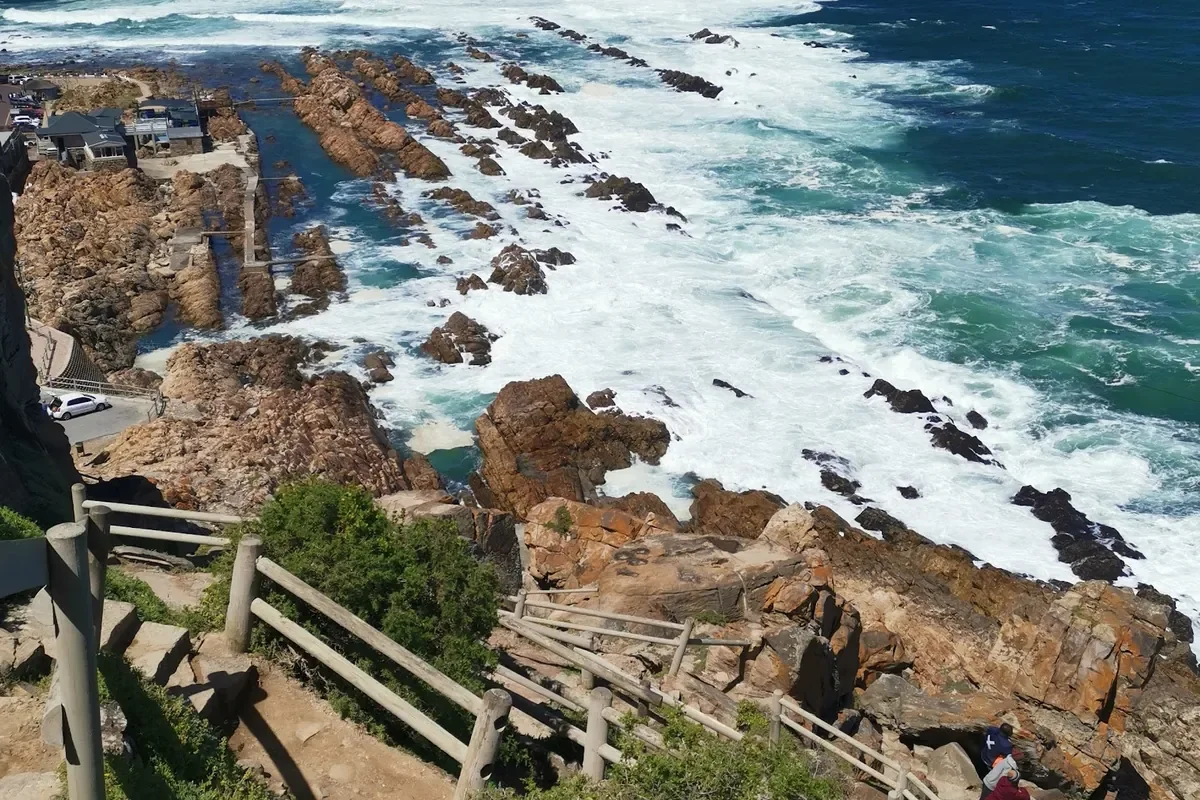
Pinnacle Point — Mossel Bay's Cradle of Human Origins
A few kilometres west of town, below a clifftop golf estate, is one of the most significant archaeological sites on earth. The Pinnacle Point caves have been excavated since 2000 by a team from the Mossel Bay Archaeology Project, and what they found here changed how we understand the emergence of modern human behaviour.
At cave PP13B, deposits dated to roughly 164,000 years ago contain evidence of systematic shellfish exploitation — early humans harvesting coastal protein — and the deliberate grinding and use of ochre pigment, one of the earliest known examples of abstract symbolic behaviour. At cave PP5-6, deposits dated to approximately 71,000 years ago yielded small silcrete bladelets made using heat treatment — fire applied to the rock to improve its flaking quality — a cognitive advance that appeared much later elsewhere in the archaeological record.
You visit on a guided walkway tour that descends the cliff face; the site is not open for independent exploration. Booking is essential, especially in peak season.
Big 5 game reserves near Mossel Bay
You don't need to fly to Kruger. Two malaria-free private reserves sit within an easy drive of Mossel Bay, which makes this the closest Big 5 destination to Cape Town on the entire South African coast.
Gondwana Private Game Reserve covers 11,000 hectares of fynbos and subtropical thicket in the Outeniqua foothills, about 35 km north of Mossel Bay on the R327 near Herbertsdale. The Big 5 are all present and the malaria-free status means you can go year-round without prophylactics — a meaningful advantage for families. Day visits and overnight stays both available.
Botlierskop Private Game Reserve, between Mossel Bay and George, is the other option — day safaris as well as overnight stays, with a similar combination of Big 5 and a focus on the family market.
Skydiving over Mossel Bay
Skydive Mossel Bay runs tandem jumps from 10,000, 14,000 or 16,000 feet — freefall at 200–240 kph for 35–60 seconds before the canopy opens, depending on the altitude you choose. The reason to do it here rather than elsewhere on the coast: on the scenic climb and during the canopy ride down, you get a sweep over the Indian Ocean, the Outeniqua Mountains and the Garden Route beaches all at once.
Getting to Mossel Bay from Cape Town
Mossel Bay sits roughly 386 km east of Cape Town via the N2 — a straightforward highway drive of about four hours, depending on traffic through Somerset West and Swellendam. The route passes the Overberg wheatlands and the Breede River valley before the mountains close in near the Tradouw Pass area, and the Indian Ocean appears below the final descent into Mossel Bay.
There's no direct train or scheduled coach service that's practical for most visitors — the vast majority arrive by car. If you're flying in, George Airport (GRJ) is the closest airport, about 55 km east on the N2, with regular flights from Cape Town, Johannesburg and Durban. From George Airport, Mossel Bay is a 40-minute drive west.
Mossel Bay is the traditional western gateway to the Garden Route. If you're planning the full drive east, the Garden Route travel guide covers every town from Mossel Bay through to Storms River.
When to visit Mossel Bay
Mossel Bay has one of the most consistent climates on the South African coast. The town sits in a natural bowl that shelters it from the south-westerly, which means the summer wind that batters much of the Western Cape is noticeably less aggressive here. Rain falls year-round rather than in a single wet season, and is rarely prolonged enough to ruin a visit.
- Summer (November–March): warmest water temperatures (20–22°C), peak holiday season, busiest beaches. Book ahead for accommodation and activities.
- Autumn and spring (April–May, September–October): shoulder season — good weather, lower prices, fewer people. Whale watching season starts in June.
- Winter (June–August): peak whale-watching season (southern rights, peak August–September), cooler and sometimes windy but rarely cold. Best time for shark cage diving and boat trips if you're comfortable in a light wetsuit.
The main consideration is whale season: if you're coming primarily for whale watching, June to November is the window, with August and September the statistical peak for southern right whale sightings in the bay.
Where to stay in Mossel Bay
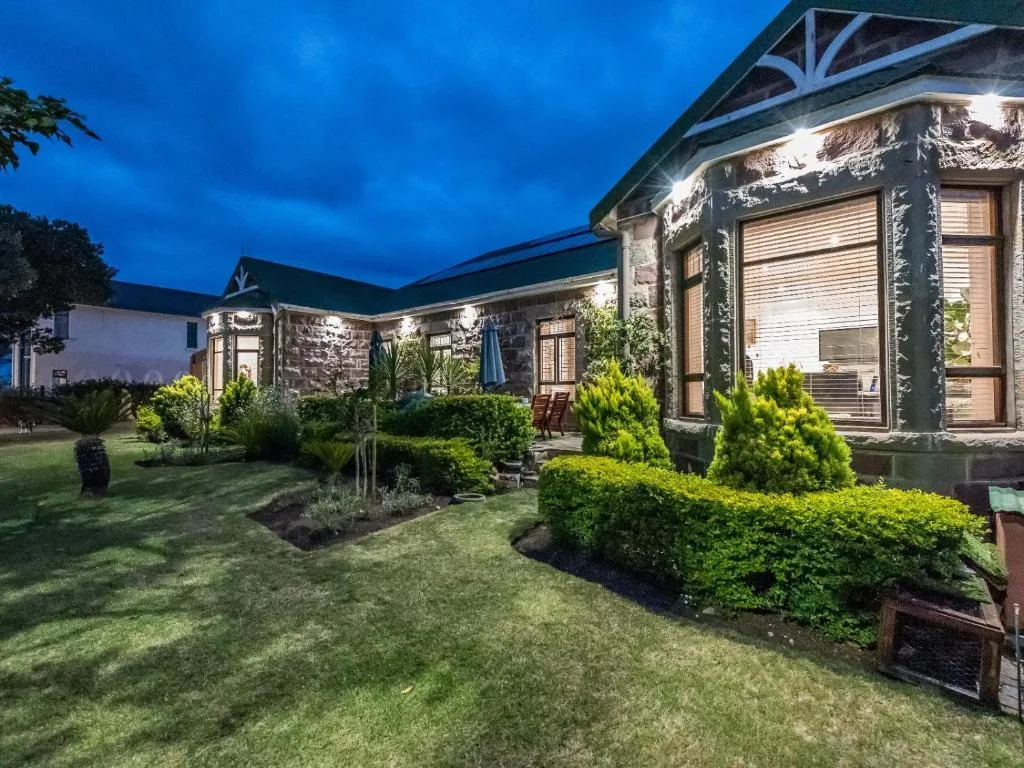
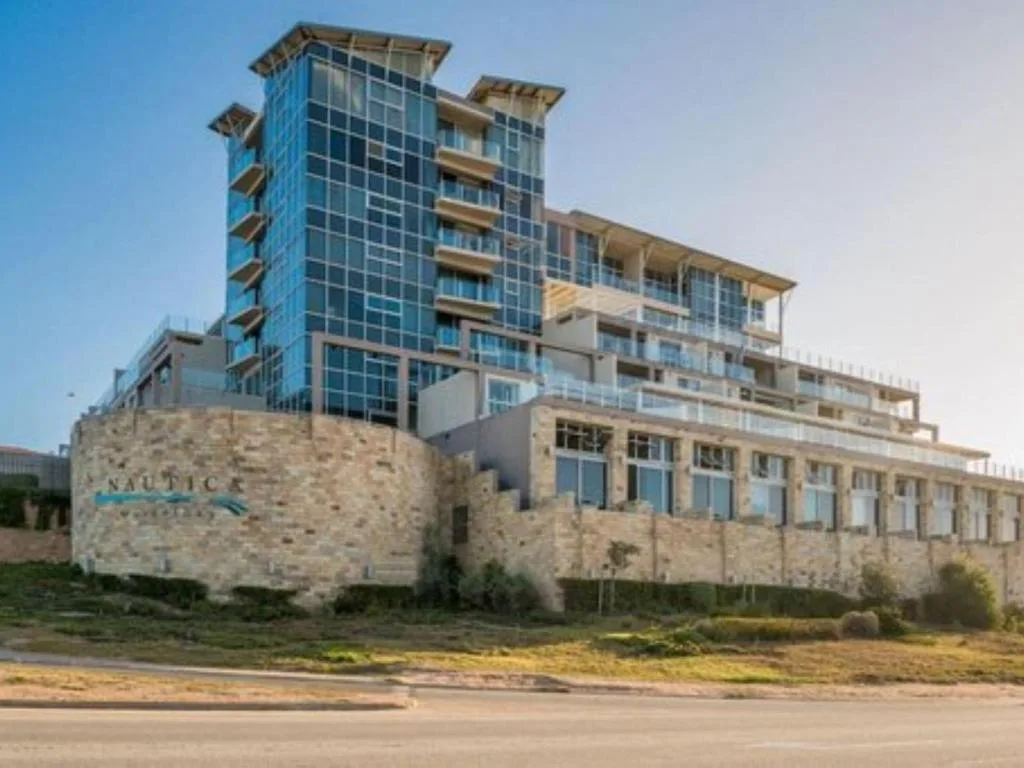
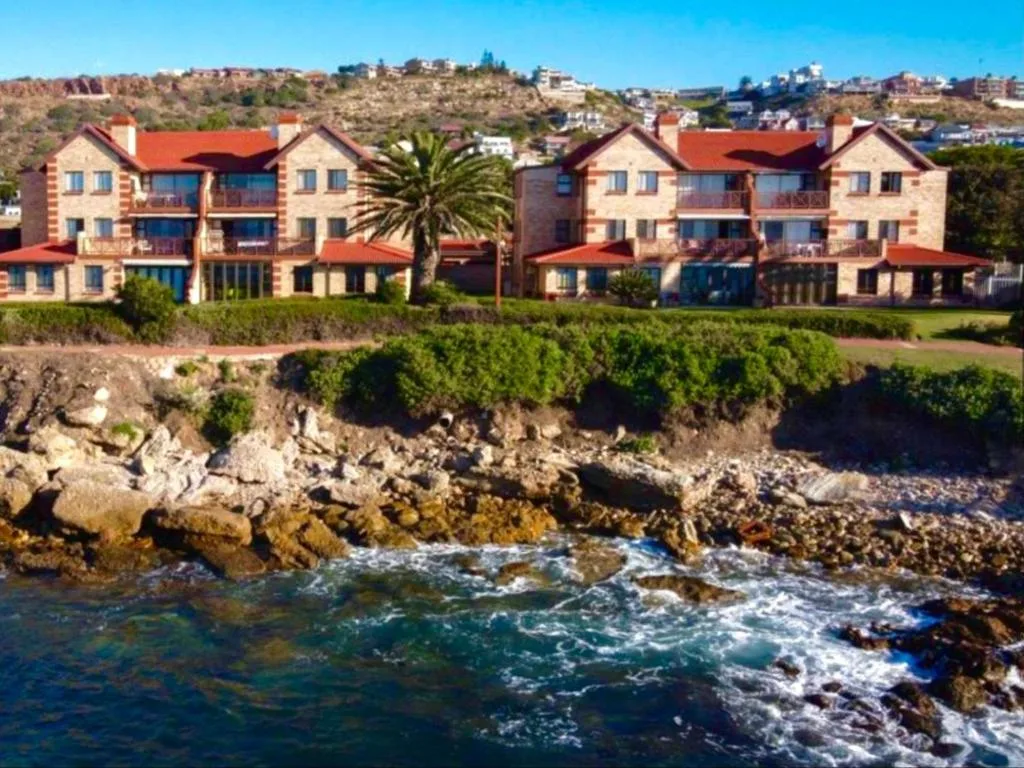
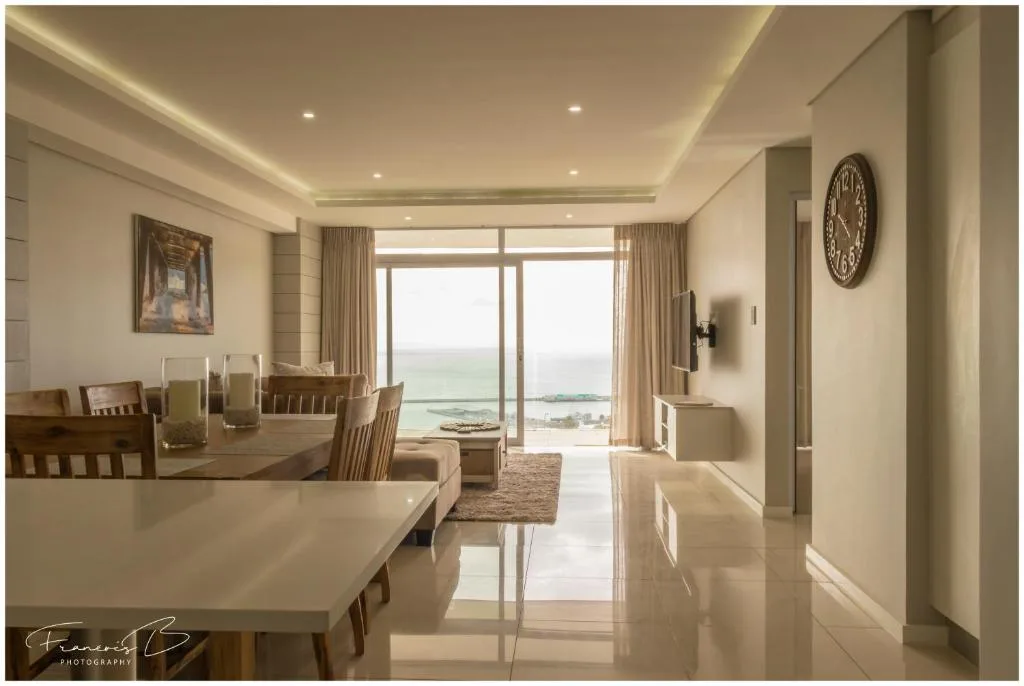
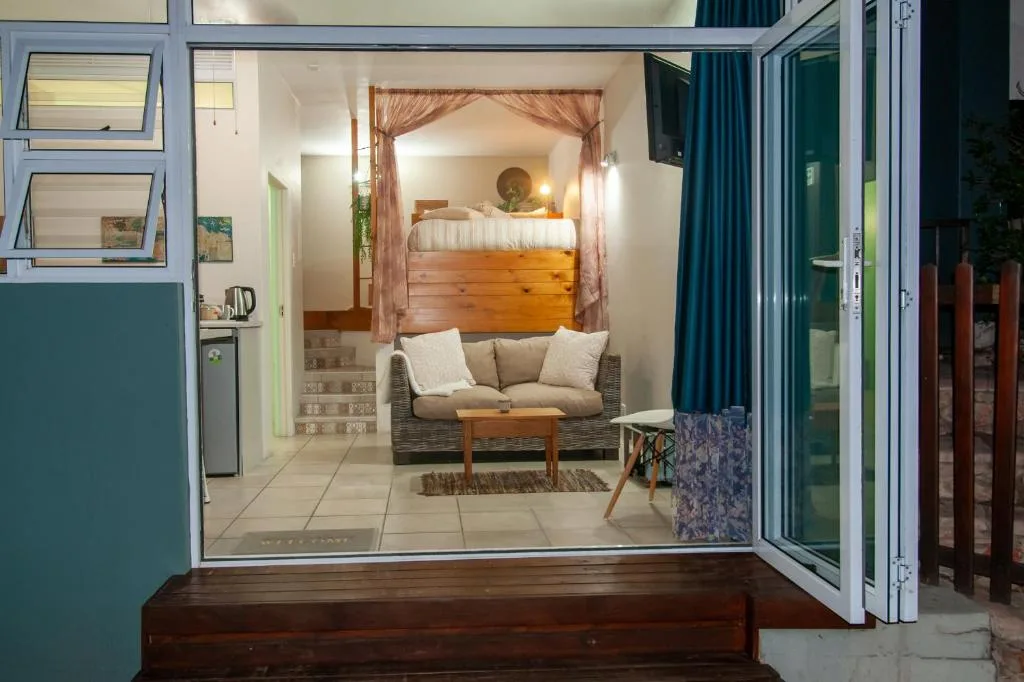
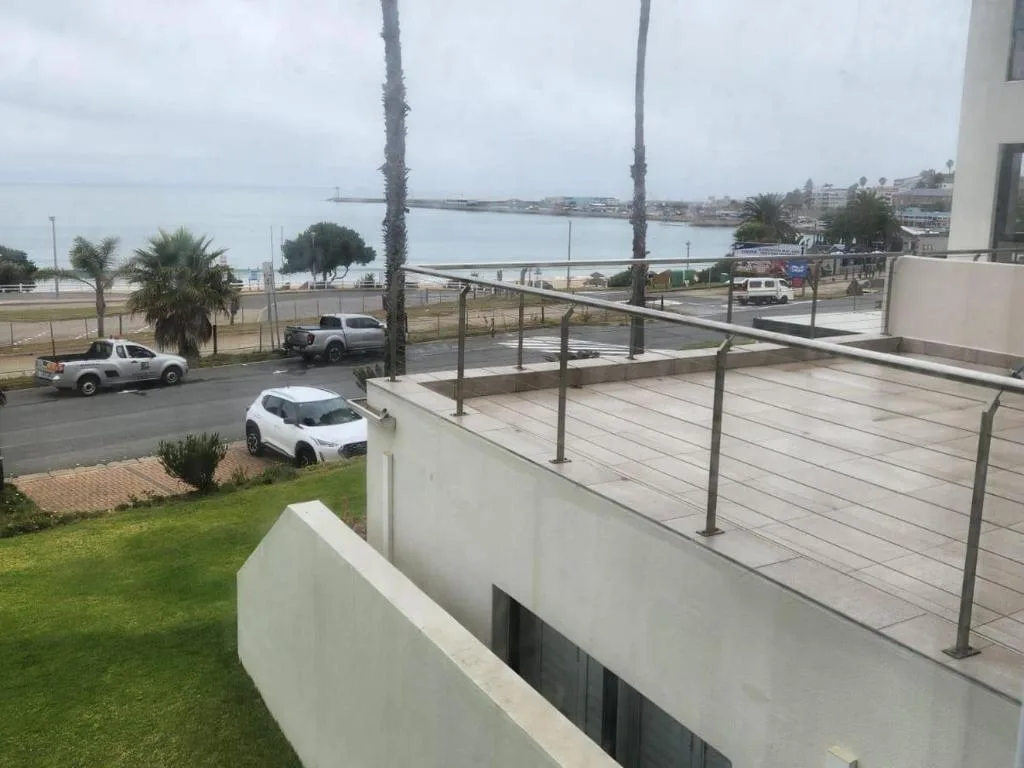
Self-catering gives you the most flexibility in Mossel Bay — a kitchen for the fresh fish you'll buy at the harbour, space to spread out between activities, and usually better value than a hotel for a multi-night stay. The town is compact enough that most self-catering options are within a short drive of both the beaches and the harbour, so location choice comes down to preference: stay near Santos and De Bakke for the town beach; stay near The Point for the surf and the lighthouse views.
Browse our full collection of Mossel Bay self-catering stays. Two well-reviewed options to start with:
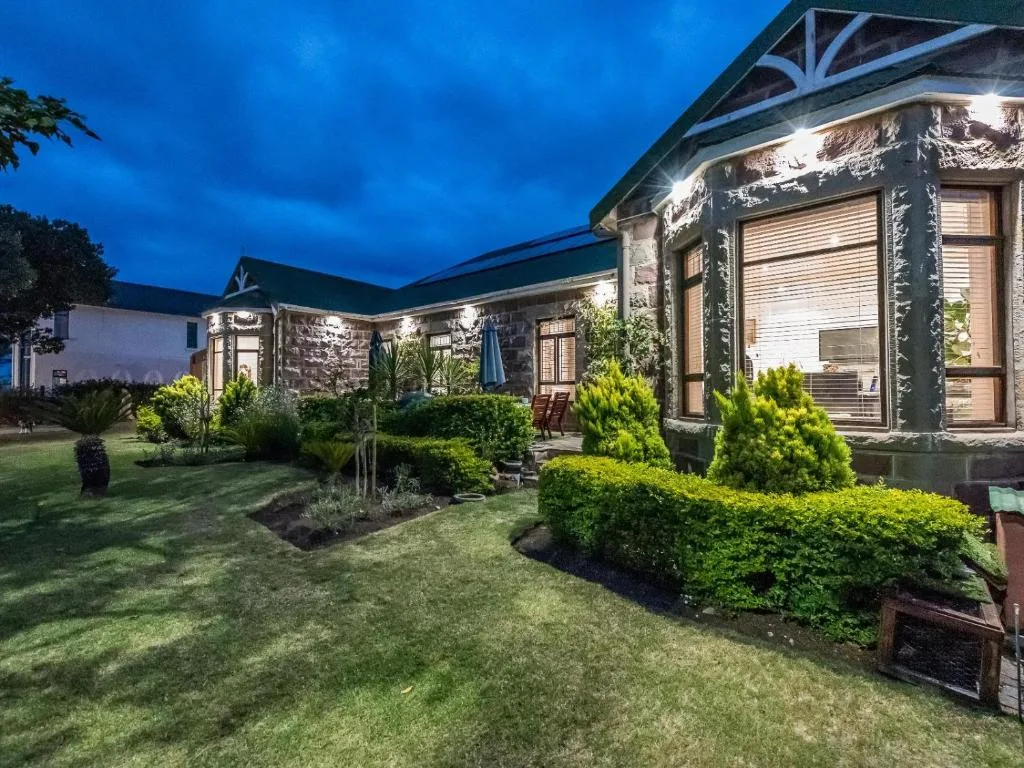
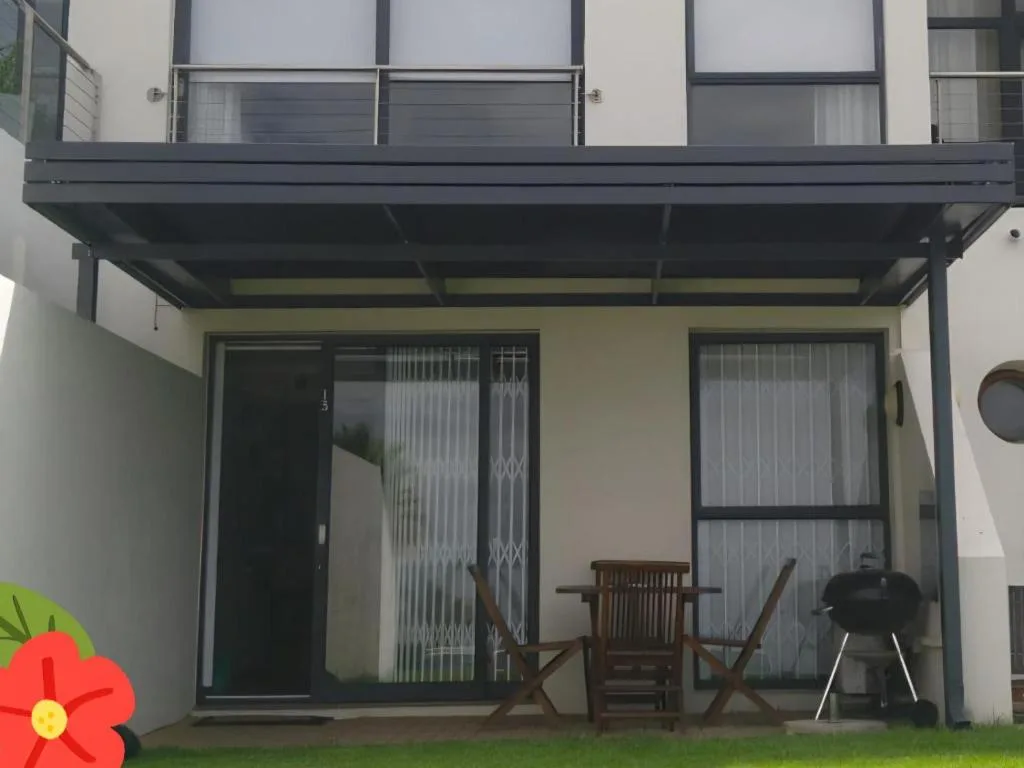
Where Mossel Bay stays sit
Every listing plotted, with attractions dotted around it. Tap a navy pill to see the stays in that cluster.
Frequently asked questions
What is Mossel Bay best known for?
Mossel Bay is best known as the site of the first European landing on South African soil — Bartolomeu Dias dropped anchor here on 3 February 1488. Today it is known for the Dias Museum and its full-size Portuguese caravel replica, Cape fur seals and great white sharks at Seal Island, the Blue Flag Santos Beach, and the Pinnacle Point cave system where archaeologists found some of the earliest evidence of modern human behaviour.
What is there to do in Mossel Bay for free?
Plenty. Walk the full 13.5 km St Blaize Trail along the clifftop to Dana Bay, or just the first hour out and back. Swim at Santos or Diaz Beach at no cost. Wander the Bartolomeu Dias Museum Complex grounds and see the Post Office Tree without paying museum entry. Drive out to the Cape St Blaize Lighthouse point for the view over the bay — no ticket needed. The working harbour is worth a walk-around too.
How many hours is it from Cape Town to Mossel Bay?
About four hours, depending on traffic. The distance is roughly 386 km via the N2 — a straightforward highway drive, mostly two lanes with the Overberg mountains and Breede River valley to break it up. Mossel Bay is the western gateway to the Garden Route, so it is the natural first overnight stop on a coastal road trip east.
What language is spoken in Mossel Bay?
Afrikaans is the dominant home language — around 57% of Mossel Bay residents according to the 2022 census. Xhosa is spoken by about 31% and English by roughly 7%. In practice, English is widely used in tourism and business, so visitors should have no trouble getting around.
What is the nicest town on the Garden Route?
It depends what you are after. Mossel Bay has the richest single-day activity menu and the deepest history — Dias Museum, Seal Island, shark diving, Pinnacle Point, clifftop hiking and Big 5 nearby. Knysna wins on lagoon scenery and the iconic Heads. Plettenberg Bay has the best surf beaches. Most people who spend time on all three end up with strong opinions — and different favourites.